Rebound
A mobile app that improves the second-hand book shopping experience and helps connect book lovers sustainably.

Role
Product Designer & Researcher
Tools
Figma, Figjam, Adobe Illustrator, Google Forms, Chatgpt
How can we combine sustainability with the retail shopping experience?
Brief
Design a mobile app with a partner that enhances the retail shopping experience while encouraging more sustainable purchasing habits.
The app should help users easily discover products, explore eco-friendly alternatives, and make more mindful shopping decisions through intuitive browsing and personalized recommendations.
Setting the scene
Problem Identification
Meet Peter(35), an information security analyst living in San Francisco who enjoys reading about finance, cybersecurity, and emerging technology. Peter values discovering meaningful books but struggles with growing book clutter at home and the difficulty of finding affordable second-hand options.
This reflects a common challenge for many readers who want to continue exploring books without contributing to unnecessary waste or dealing with complicated resale platforms.
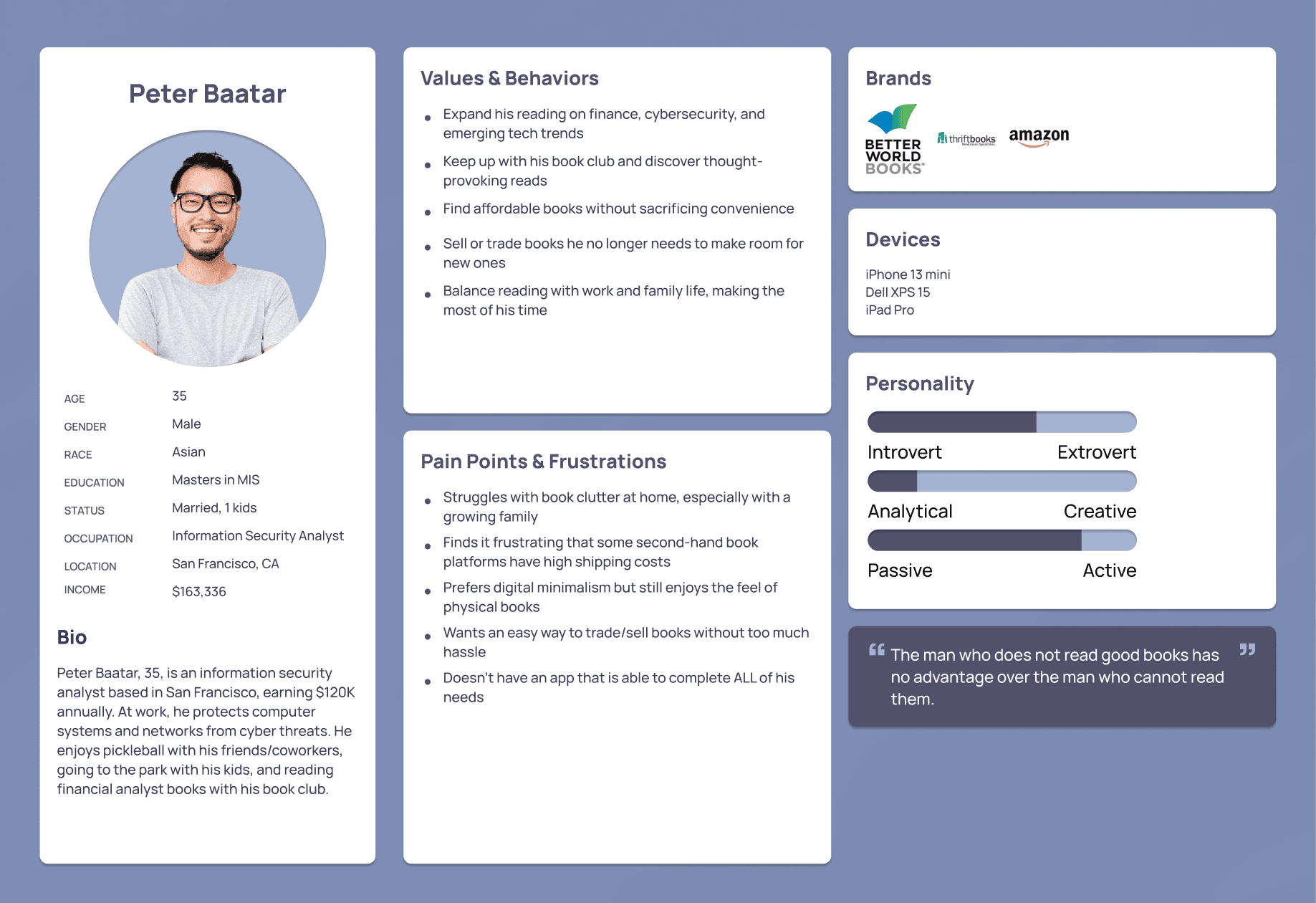
Many readers struggle to read books sustainably.
Problem Statement
Many readers struggle to easily discover, trade, and purchase second-hand books, highlighting the need for a mobile platform that simplifies sustainable book exchange through features like community listings, personalized discovery, and crowdsourced data to connect readers and recirculate pre-loved books.
Our goal: Design a mobile app that helps readers support a more sustainable reading experience to refresh their reading lists while reducing waste by making it easy to trade, sell, or purchase pre-loved books.
The growing market for sustainable reading
Data Exploration
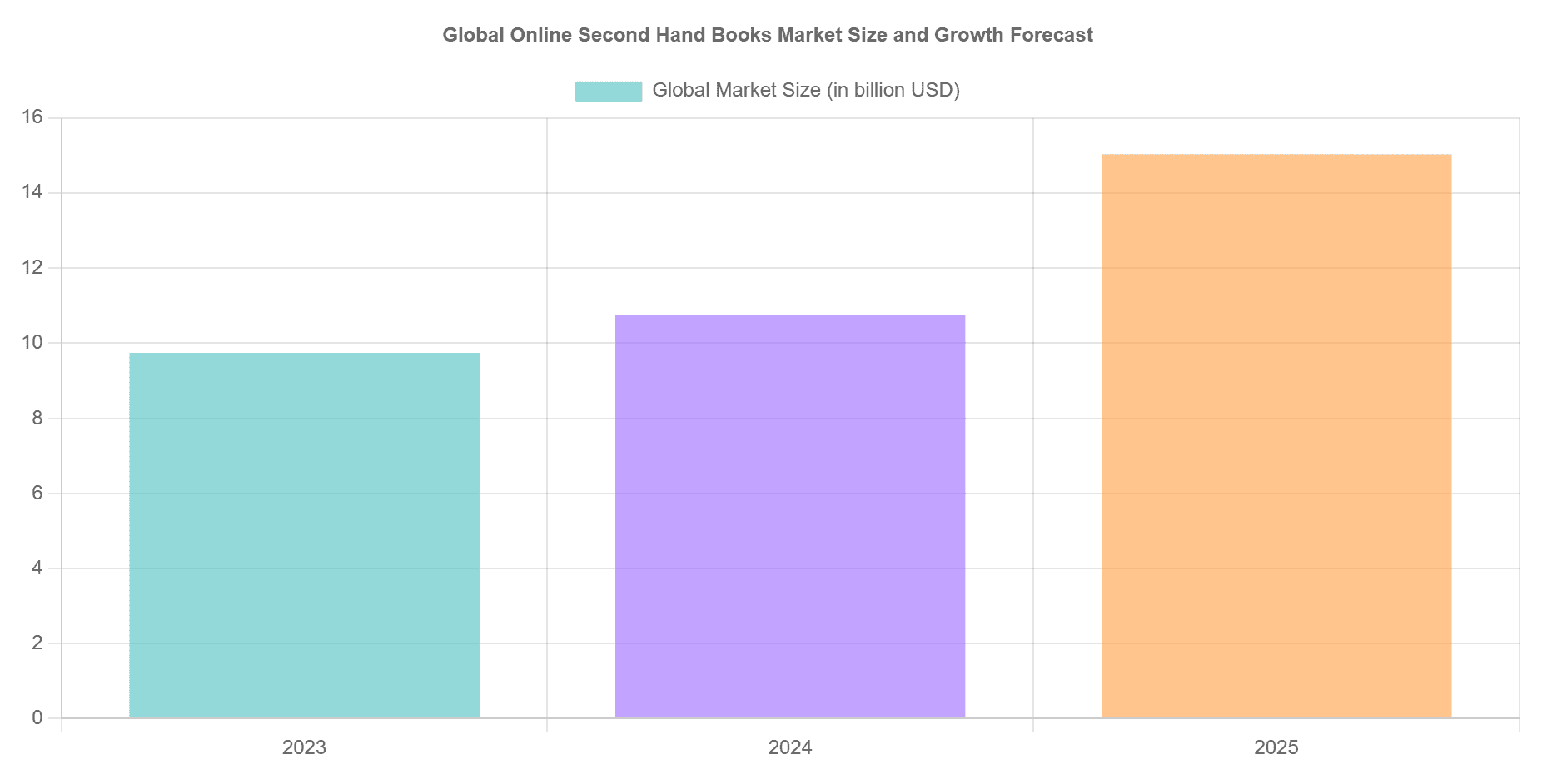
Rising consumer interest in affordable and eco-friendly reading alternatives.
The global second-hand book market is expected to grow from $10.2B in 2024 to $14.5B by 2028, reflecting a 6% CAGR and increasing demand for affordable and sustainable reading options.

3 out of 4 consumers (77%) express a desire for more sustainable living and shopping.
77% of consumers believe it is important for products to be sustainable and environmentally responsible, indicating that environmental values are becoming a mainstream expectation.
40+ data points, 4 rounds of user interviews and affinity mapping later…
User Research
We found 3 key pain points
Finding specific second-hand books is difficult.
Users spend excessive time searching across multiple platforms and often give up or buy new books instead.
Users are unsure about the quality and reliability of second-hand listings.
Buyers worry about inaccurate descriptions, unknown book conditions, or unreliable sellers, which makes them hesitant to purchase used books.
Buying or exchanging second-hand books is not as convenient as purchasing new ones.
Users must browse multiple sites, deal with inconsistent listings, or coordinate shipping and exchanges, making the process feel time-consuming and fragmented.


Affinity Map & User Interview questions
What apps are currently on the market?
Competitor Analysis

Amazon/Kindle
Amazon and Amazon Kindle offer ebooks, physical books, audiobooks, and self-publishing tools as a digital reading platform that enables users to purchase, download, and read ebooks.

Hoopla
Hoopla is a digital media service that allows users to borrow ebooks, audiobooks, movies, and music for free through participating libraries.

Biblio
Biblio is an online marketplace that connects readers with independent bookstores selling books, providing access to a wide selection of second-hand and hard-to-find titles.
Our key takeaway:
There currently aren't any apps that prioritize sustainable book circulation.
Introducing… Rebound
Solution
Helping great books find their next chapter.
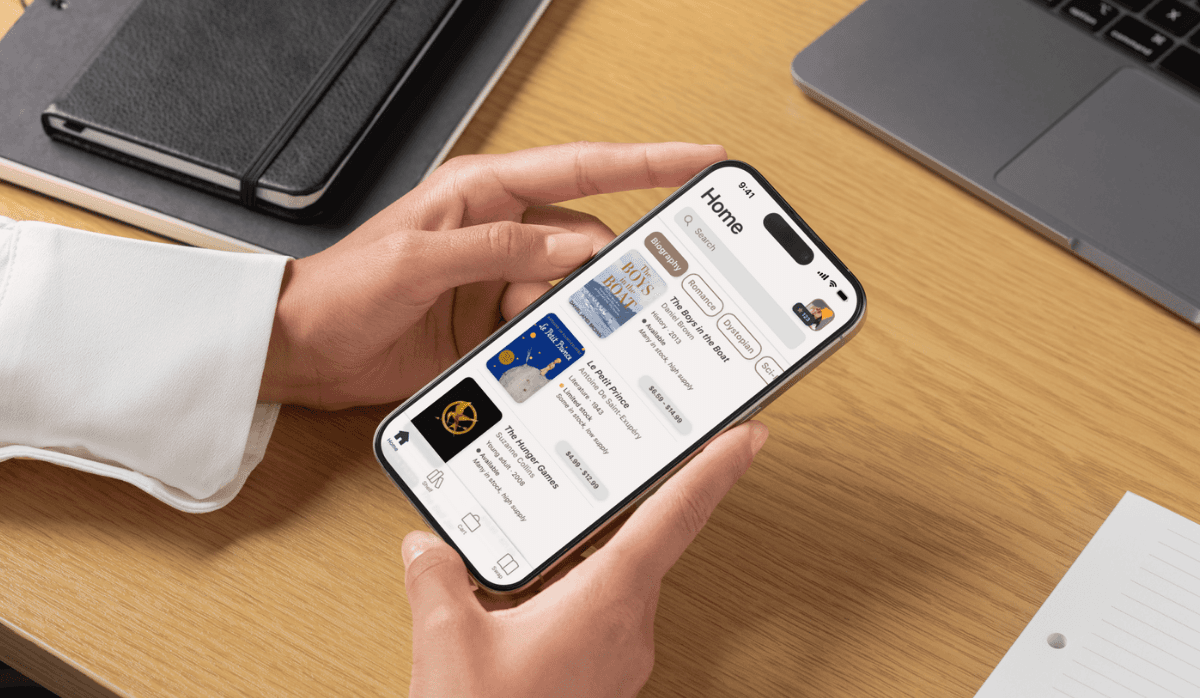
Rebound is a mobile library application that helps readers discover, buy, and exchange second-hand books, encouraging affordable book access through a community-driven marketplace.

Key features include:
Community-Driven Recommendations & Category Filters
Readers can discover books through community recommendations and easily browse titles using curated categories and filters.
Book Swap Credit System
Users can trade in their used books to earn credits, which can then be applied toward purchasing other books on the platform.
Verified Used Book Listings
Users can purchase second-hand books through detailed listings that include condition descriptions and seller verification to support more reliable and informed purchases.
User Flow & Low Fidelity Wireframe
User flow & Wireframe
Wireframing helped us define our product features, such as Community-Driven Recommendations & Category Filters, Book Swap Credit System, and Verified Used Book Listings.


Iterating based on mentor & user feedback
User Feedback
During the low- and mid-fidelity design phases, we consulted multiple mentors and users to gather feedback on our screens.
Key Insights:
Clarify the "Swap for Credit" wording & phrasing confused users
For adding a book, add a manual add option for users.
Flow for purchasing book felt difficult to understand. Users felt they needed confirmation after purchasing.

User testing for low fidelity prototype
Prioritizing accessibility in design systems
Design Process
For our design system, we wanted to keep the colors as simple and intuitive as possible. We wanted to keep the design clean and easy to understand for all users. The colors are in compliance with WCAG Guidelines and Sans serif font to promote accesibility.

Completed Prototype
FInal Design


Next steps & reflections
Reflections
Throughout this experience, I have had the oppourtunity to work in a small but mighty team from ideation to product. Although challenging, I have learned a lot through trial and error. A huge thank you to my amazing partner, Peyton Enderle, and my mentor/professor, Chitra Gopalakrishnan for working with me on this project. Without the efforts of my partner and the guidance of my mentor, this project would not have been able to come to fruitation.
Next goal: Continue to utilize user testing and implement A/B testing to further develop features.